

In engineering and construction, shop drawings are the backbone of project execution—transforming design intent into fabrication reality. However, as projects grow in complexity and timelines tighten, more engineering firms are asking: Should we outsource our shop drawings? Increasingly, the answer is yes—when done strategically.
In fact, research by Deloitte reveals that outsourcing drafting services to regions with competitive wage rates can reduce labor costs by as much as 40–50% in certain disciplines, thanks to access to lower-cost labour markets and the ability to shift expenses from fixed overhead to flexible, project-based costs
This blog explores when outsourcing shop drawings makes the most sense and why it can be a game-changer—unlocking new efficiencies, reducing risks, and enhancing overall project delivery.
What Are Shop Drawings?
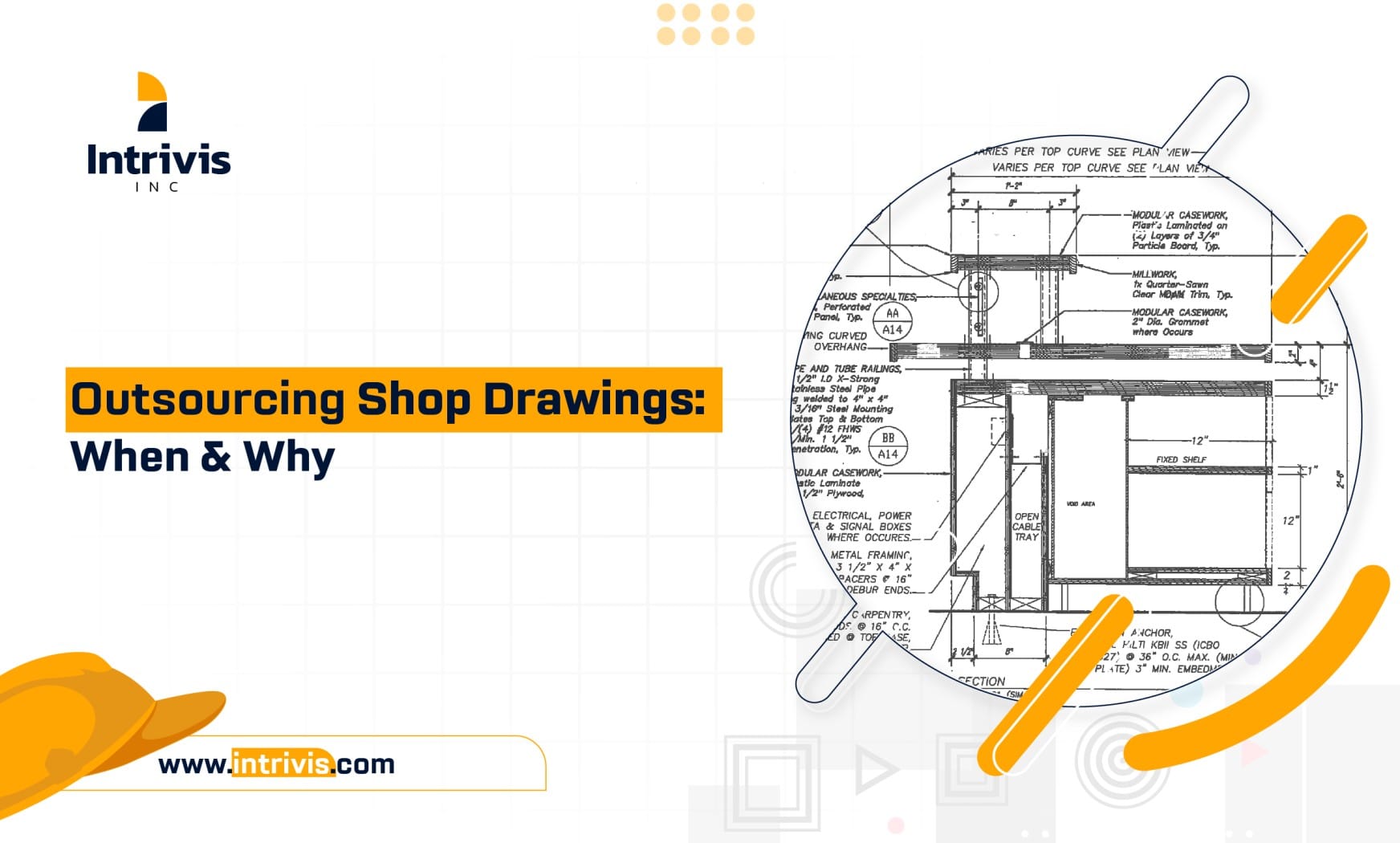
Shop drawings are detailed construction-level documents prepared by contractors, fabricators, or manufacturers that showcase how building components will be fabricated, assembled, or installed.
Typical shop drawings include:
- Steel fabrication drawings
- HVAC coordination layouts
- Electrical and plumbing detailing
- Millwork and joinery drawings
- Precast or structural component detailing
These drawings differ from design drawings — they are much more granular, focusing on construction feasibility, material specifics, and component integration.
When Should Engineering Firms Consider Outsourcing?
Outsourcing isn’t a one-size-fits-all solution — it’s a strategic decision best applied in key scenarios:
1. Peak Workload Periods
When internal teams face tight deadlines or multiple simultaneous projects, outsourcing shop drawings offers an effective way to quickly expand capacity. It enables firms to meet delivery schedules without the overhead of long-term hiring, allowing in-house staff to stay focused on high-priority design and coordination tasks.
2. Tight Project Timelines
By leveraging partners in different time zones, outsourcing enables continuous 24/7 workflows. This approach accelerates drawing production, shortens delivery schedules, and ensures critical project milestones are met without overburdening internal teams.
3. Specialized or Complex Systems
Certain shop drawings—such as those for curtain walls, complex façades, or industrial piping systems—demand highly specialized, domain-specific expertise that may not be readily available in-house. Partnering with outsourcing firms that focus exclusively on these disciplines provides access to seasoned professionals who understand the unique technical requirements, industry standards, and detailing nuances involved. This ensures greater accuracy, compliance, and constructability in the final deliverables.
4. Cost Efficiency Goals
Hiring, integrating, and training in-house drafting staff can be a lengthy and expensive process. Outsourcing provides immediate access to skilled drafters without the long-term expenses of salaries, benefits, and training programs. Additionally, research by Deloitte shows that 59% of companies outsource primarily to reduce costs, highlighting its effectiveness as a cost-optimization strategy. This makes outsourcing a highly cost-effective way to maintain quality while improving budget efficiency.
5. Scaling Drafting Resources on Demand
Many engineering firms operate with lean drafting teams to control overhead. When project workloads surge beyond in-house capacity, outsourcing provides a flexible, seamless way to scale resources—ensuring deadlines are met without compromising quality or overextending internal staff.
Why Outsource Shop Drawings?
Having identified the situations where outsourcing is most effective, it’s equally important to understand the value it brings. Here’s a closer look at the key benefits and competitive advantages it offers.
1. Accelerated Project Timelines
- Parallel processing across time zones
- Faster iteration and client review cycles
- Supports early material procurement
2. Access to Global Talent & Technology
- Skilled CAD/BIM professionals with niche expertise
- Use of cutting-edge software (AutoCAD, Revit, Tekla, SolidWorks)
- BIM-enabled 3D shop drawings and clash detection
3. Quality and Accuracy
- Outsourcing firms often have multi-level QC systems
- Expert teams ensure shop drawings comply with all relevant standards and codes, including ASTM, AISC, ASME, and USNCS, as well as project-specific requirements.
- Reduced RFIs and on-site change orders
4. Flexibility & Scalability
- Scale teams up/down based on project load
- Pay per drawing/model basis or milestone billing
- No long-term commitment
5. Cost Control
- Reduced labour costs
- No software or hardware investment
- Avoids recruiting, training, and retention expenses
Best Practices When Outsourcing Shop Drawings
To maximize the value of outsourcing, follow proven strategies that ensure quality, efficiency, and seamless collaboration between your internal team and external partners.
1. Vet Your Outsourcing Partner
Assess potential partners by reviewing their past work, industry-specific expertise, and client references to ensure they can meet your technical and quality requirements.
2. Start with a Pilot Project
Begin with a small assignment to evaluate their communication style, adherence to deadlines, and quality of deliverables before committing to larger workloads.
3. Set Clear Expectations
Provide standardized templates, detailed markups, and shared checklists to align deliverables with your firm’s workflow and standards.
4. Ensure Version Control
Implement collaboration tools like BIM 360, Asana, or similar platforms to maintain accurate file versions, track changes, and avoid errors.
5. Communicate Regularly
Hold weekly check-ins and conduct redline reviews to maintain alignment, address issues early, and ensure continuous progress.
6. Establish QA/QC Processes
Define clear quality assurance and quality control steps, including internal reviews, to verify accuracy before final delivery.
7. Choose Domain Expert Partners
Select partners with proven expertise in specific disciplines—such as MEP, structural, or façade detailing—to ensure precision and compliance.
Conclusion: A Strategic Advantage, Not Just a Cost-Cutting Tool
Outsourcing shop drawings is no longer just a cost-saving strategy — it’s a strategic lever for enhancing delivery speed, improving quality, and unlocking scalability. When done right, it enables engineering firms to focus on what they do best — innovation, design, and project management — while relying on expert partners to handle the detailing.
Our team of experienced professionals at Intrivis understands the importance of choosing the right service provider for your business. With a collective 30 years of experience, our subject matter experts deliver high-quality engineering, drafting, and design support services, including precise and compliant shop drawings. Equipped with advanced tools, seasoned professionals, and a client-first approach, we’re committed to making your project a success. Contact us today to discuss how we can support your BIM, drafting, design, and shop drawing requirements!



