

In United States of America, Mechanical, Electrical, and Plumbing (MEP) services market size was valued at USD 45.32 Billion in 2024 and is expected to reach USD 102.2,5 Billion by 2032, growing at a CAGR of 10.7% from 2025 to 2032.
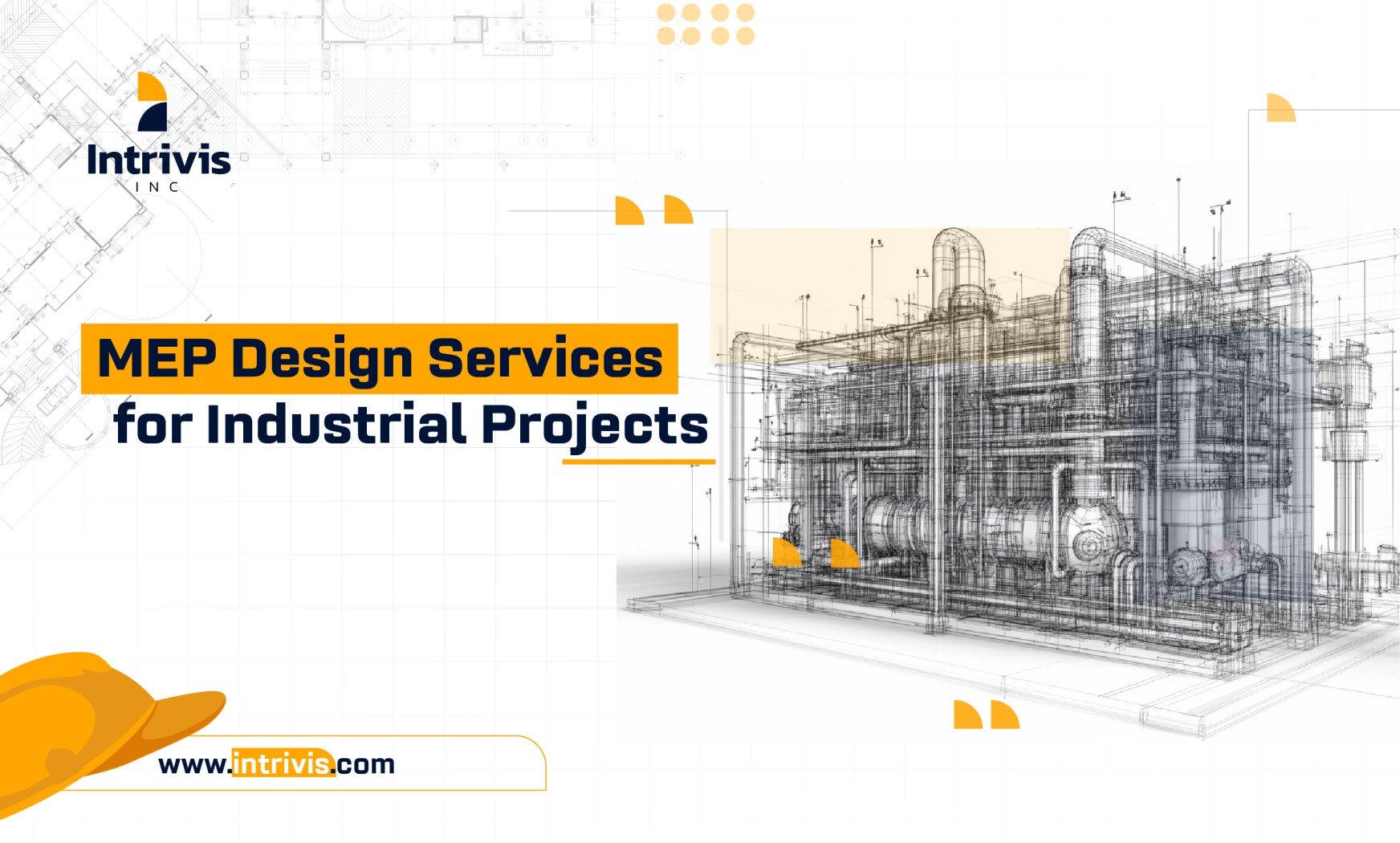
For industrial projects, Mechanical, Electrical, and Plumbing (MEP) systems are crucial with respect to its functionality and safety. The basic structure of each industrial operation is made up of MEP systems, which include waste management, water supply, power distribution, ventilation, heating, and cooling. Designing these systems is often a challenging process as it involves a lot of requirements that are specific to certain types of industries.
In this blog, we will explore these challenges and discuss potential solutions to overcome them.
MEP Design Services for Industrial Projects: Challenges and Solutions
1. Complexity of Systems
Challenge: Industrial projects frequently include the design of intricate MEP systems that must be carefully planned to meet the facility’s unique needs. Complex ventilation requirements, high-pressure systems, hazardous materials, and controlled temperature and humidity are just a few of the special requirements that industrial facilities frequently require. It takes an extensive understanding of the facility’s operations and procedures to integrate different mechanical, electrical, and plumbing components. If not appropriately handled, this complexity may result in errors in design, inefficiencies, and increased costs.
Solution: MEP systems can be made less challenging by using an integrated design approach. This method ensures that every aspect of the design is considered by involving all stakeholders in collaboration from the very beginning of the project. This involves considering elements including the facility’s size, purpose, occupancy, and specific industry regulations. It is possible to ensure that all required systems are suitably integrated and satisfy the facility’s operational requirements by collaborating closely with skilled MEP engineers and designers.
2. Coordination Among Disciplines
Challenge: MEP design requires smooth collaboration between structural, mechanical, electrical, plumbing, and architectural engineers. Ineffective coordination can lead to disagreements, delays, and rework, all of which can have a major effect on the project’s budget and schedule.
Solution: Building Information Modeling (BIM) can help with integration by providing a detailed digital representation of the project, which enables improved visualization, clash detection, and system layout optimization. Achieving successful MEP design requires establishing clear communication channels and encouraging cooperation amongst many disciplines. Coordination and conflict resolution can be improved by frequent meetings, workshops, and the use of collaborative tools.
3. Compliance with Regulations
Challenge: For industrial projects, stringent standards and regulations must be followed to ensure the MEP system’s dependability and safety. Different locations and industries have different regulations. Accessing all the regulations and standards can be difficult, and noncompliance can lead to operational problems and quality compromise.
Solution: Building codes are primarily designed to reduce potential risks and hazards. The systems are designed in a way that reduces the risk of fire, electrical shock, and other dangerous situations when these rules are followed. To ensure compliance, the design team must have knowledge about the pertinent rules and standards. Any compliance problems can be found and fixed early in the project with the aid of regular audits, inspections, and documentation. Additionally, incorporating Artificial Intelligence (AI) technology can significantly enhance compliance management. It can assist in monitoring and analyzing vast amounts of data to ensure adherence to regulations.
4. Sustainability
Challenge: Energy-efficient MEP systems are becoming more and more important in industrial projects as sustainability becomes more and more important. Given the significant energy consumption of industrial facilities, it is essential to have methods in place that reduce energy waste. It is quite difficult to design a system that uses the least amount of energy while yet performing at its best.
Solution: Energy-efficient design ideas can help achieve environmental goals. This entails selecting energy-efficient equipment, optimizing system designs, and putting advanced control systems into effect. Energy efficiency can be further increased by using renewable energy sources, such as solar power and wind. Energy analysis and simulations can provide useful information about the performance of MEP systems and highlight areas of improvement. Furthermore, setting up suitable water treatment technologies might ensure that wastewater is sufficiently cleaned before being released, lessening the impact on the environment.
5. Budget Constraints
Challenge: Budgetary restrictions often fall on industrial projects, and MEP design services are no exception. It can be difficult to strike a balance between the requirement for effective, high-quality systems and financial constraints. Unexpected problems, scope changes, schedule delays or interruptions, design flaws, or poor planning can all result in cost overruns, which put a strain on the project’s budget.
Solution: To keep within limits on expenditure, cost management must be done well. This requires thorough planning, precise cost estimation, and ongoing expense tracking. Value engineering methods can be used to find ways to cut costs without sacrificing the quality and efficiency of MEP systems. Regular reviews and adjustments can ensure that the project remains financially viable.
MEP design services for industrial projects are a challenging effort that requires careful preparation, coordination, and safety consideration. Even if there are many obstacles to overcome, taking a proactive and cooperative attitude can help. Industrial projects can achieve efficient, safe, and sustainable MEP systems by integrating design processes, encouraging good communication, ensuring compliance, focusing on energy efficiency, and controlling costs.
Intrivis, Inc. has put in the time and effort to acquire abilities to assist in MEP services ensuring adherence to best practices and norms, which has increased safety measures, decreased operating costs, and improved functioning for many of our clients. In the industrial domain, our professionals can assist businesses with the design and drafting of MEP projects. Contact us today to learn more about how we can help you drive your MEP projects forward.


