

The Architecture, Engineering and Construction (AEC) industry heavily impacts the environment, consuming resources and contributing to pollution. According to Architecture 2030, buildings generate 40% of global emissions, highlighting the urgent need for sustainable design solutions.
According to a report by Frontiers, a combination of different passive design strategies can help to significantly reduce annual energy consumption by 35.4%. Passive design is a fundamental approach to creating energy-efficient and sustainable buildings. By harnessing natural resources such as sunlight, wind, and thermal mass, passive design minimizes reliance on mechanical systems for heating, cooling, and lighting.
The Green Building Council (USGBC) reportedly saw that carbon dioxide emissions were 34% lower in Leadership in Energy and Environmental Design (LEED) certified buildings; they consumed 25% less energy and 11% less water and diverted more than 80 million tons of waste from landfills. These data emphasize the importance of implementing creative building design solutions that have a low environmental impact. In this blog we will explore key passive design strategies that contribute to efficient building performance.
Passive Design Strategies for Efficient Building Design
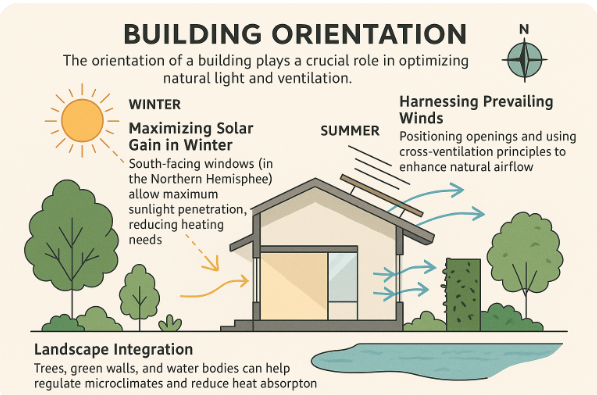
1. Building Orientation.
The orientation of a building plays a crucial role in optimizing natural light and ventilation:
- Maximizing Solar Gain in Winter: South-facing windows (in the Northern Hemisphere) allow maximum sunlight penetration, reducing heating needs
- Minimizing Heat Gain in Summer: Overhangs, external shading devices, and proper window placement prevent overheating.
- Harnessing Prevailing Winds: Positioning openings and using cross-ventilation principles to enhance natural airflow.
- Landscape Integration: Trees, green walls, and water bodies can help regulate microclimates and reduce heat absorption.
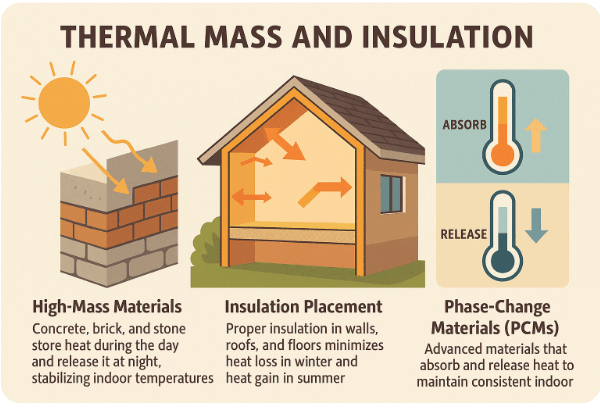
2. Thermal Mass and Insulation
Thermal mass absorbs, stores, and releases heat, which helps regulate indoor temperatures:
- High-Mass Materials: Concrete, brick, and stone store heat during the day and release it at night, stabilizing indoor temperatures.
- Insulation Placement: Proper insulation in walls, roofs, and floors minimizes heat loss in winter and heat gain in summer.
- Phase-Change Materials (PCMs): Advanced materials that absorb and release heat to maintain consistent indoor temperatures.
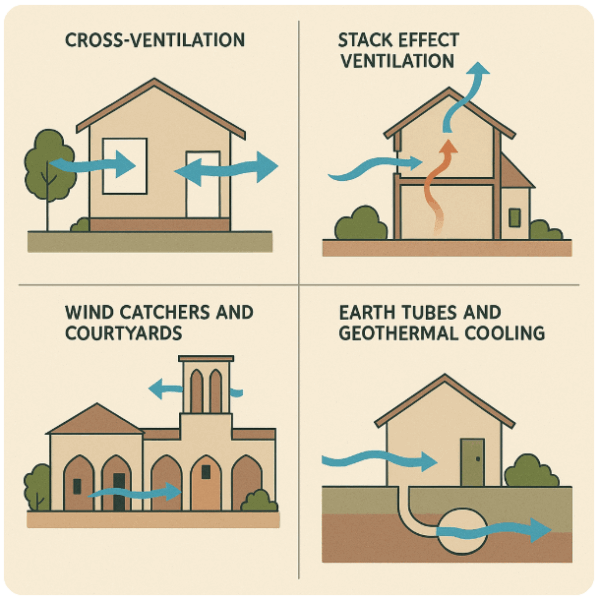
3. Natural Ventilation and Passive Cooling
Efficient air movement reduces dependence on air conditioning:
- Cross-Ventilation: Designing openings on opposite sides of a space to promote natural airflow.
- Stack Effect Ventilation: Warm air rises and escapes through high openings, drawing in cooler air from lower levels.
- Wind Catchers and Courtyards: Traditional passive cooling techniques to enhance air movement.
- Earth Tubes and Geothermal Cooling: Subterranean air channels pre-condition incoming air using ground temperatures.
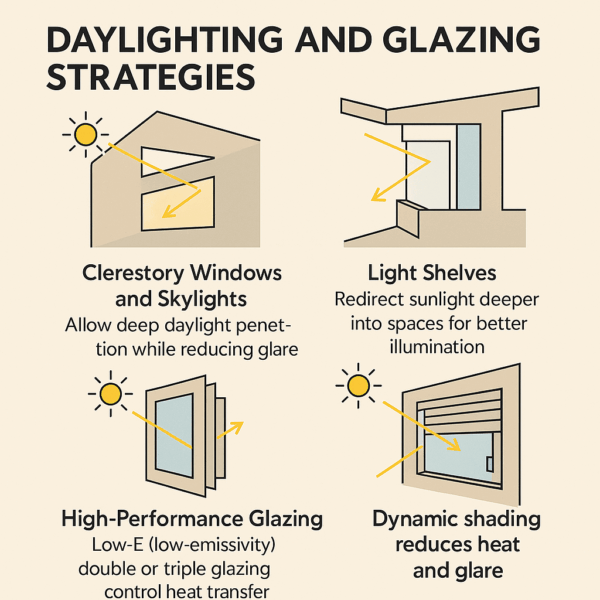
4. Daylighting and Glazing Strategies
Natural lighting reduces artificial lighting demand and enhances occupant well-being:
- Clerestory Windows and Skylights: Allow deep daylight penetration while reducing glare.
- Light Shelves: Redirect sunlight deeper into spaces for better illumination.
- High-Performance Glazing: Low-E (low-emissivity) and double or triple glazing control heat transfer.
- Automated Shading Systems: Dynamic shading devices that adjust based on sunlight intensity.
5. Shading and Solar Control
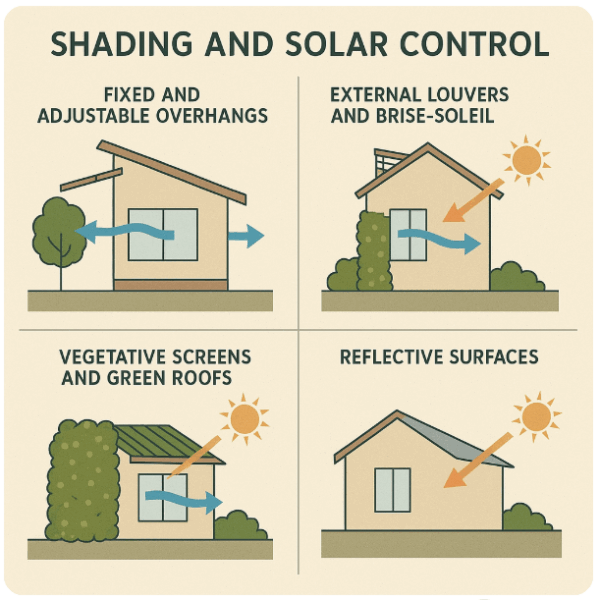
Proper shading reduces cooling loads and improves indoor comfort:
- Fixed and Adjustable Overhangs: Prevent direct solar radiation while allowing diffused light.
- External Louvers and Brise-Soleil: Architectural shading elements that block excessive sunlight.
- Vegetative Screens and Green Roofs: Natural solutions to reduce heat absorption and improve insulation.
- Reflective Surfaces: Light-colored materials and cool roofs reduce heat gain.
6. Passive Solar Heating
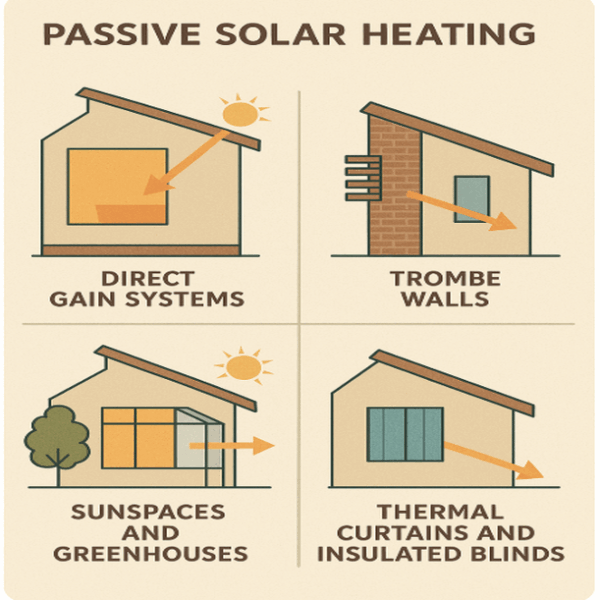
Passive solar design captures and utilizes solar energy for heating:
- Direct Gain Systems: Sunlight enters through south-facing windows, warming interior spaces.
- Trombe Walls: Thick masonry walls painted dark to absorb and slowly release heat.
- Sunspaces and Greenhouses: Enclosed spaces that collect and distribute solar heat.
- Thermal Curtains and Insulated Blinds: Reduce heat loss during nighttime.
7. Energy-Efficient Building Envelope
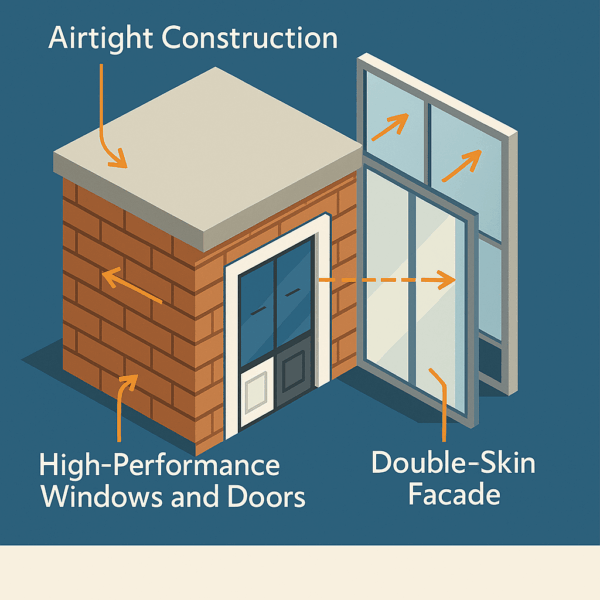
A well-designed building envelope minimizes energy loss and enhances indoor comfort:
- Airtight Construction: Prevents unwanted air leaks, reducing heating and cooling loads.
- High-Performance Windows and Doors: Reduce thermal bridging and improve energy efficiency.
- Double-Skin Facades: An extra exterior layer enhances insulation and ventilation control.
Passive design strategies are essential for creating energy-efficient and environmentally sustainable buildings. By optimizing building orientation, utilizing thermal mass, enhancing natural ventilation, and implementing effective daylighting and shading techniques, architects and designers can significantly reduce energy consumption while improving indoor comfort. These passive techniques not only reduce reliance on mechanical systems but also contribute to long-term cost savings and a healthier built environment. As the demand for sustainable construction grows, passive design will remain a cornerstone of energy-efficient building practices.
At Intrivis, we specialize in assisting delivering customized, energy-efficient, and code-compliant HVAC design support services tailored to your needs. With advanced tools, experienced professionals, and a client-first approach, we’re here to make your project a success. Contact us today to discuss how we can support your HVAC design requirements!


